


MANIFESTO
- lorenzo butturini

- Oct 13, 2020
- 3 min read
Updated: Jan 6, 2021
Time is flying by quickly. It's absurd thinking that we already reached the third week of the module (and I still feel quite overwhelmed by the massive amount of work). Today's session was the most interesting so far. Adelina finally talked us through everything we needed to know about Manifestos.
"a Manifesto is a written statement of the beliefs, aims, and policies of an organization, especially a political party." (definition from Cambridge English Dictionary)
WHY DO WE NEED ONE?
Our task is to come up with our Design Manifesto. This Manifesto will communicate to ourselves (and future employers) our point of view and our priorities as designers. It will be an honest self-analysis, and it will motivate us and push us in the right direction.
Studying History of Art, back in High School, I remember coming across this term multiple times. For instance, I remember how fascinating the Dada and the Bauhaus Manifesto were. The pure Nonsense of the former and the Minimalism of the latter blew my mind with their contents. Adelina talked about Dada and many more brilliant examples such as Dieter Rams' Manifesto, Red Alan's and many more.
DIETER RAMS MANIFESTO
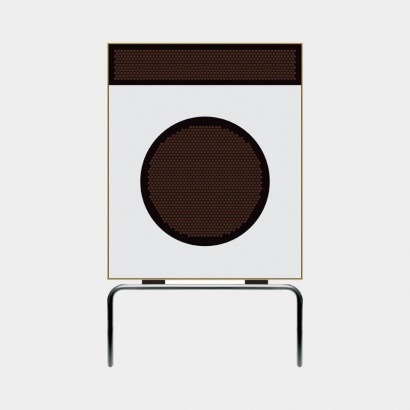
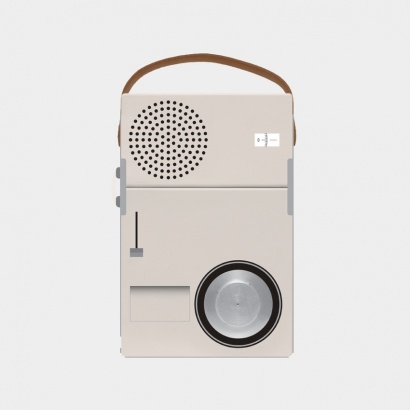
German designer Dieter Rams (for Braun) asked himself whether his design was good, and as an answer, he came up with his Ten Principles for Good Design. To him, a Good Design is Innovative, Aesthetic, Honest, Long-lasting and Environmentally friendly (these are just some of the bullet points he came up with). To have a better idea on his point of view, I watched one of his interviews (Adelina provided us with the link). This interview was insightful and very interesting. The designer talked about his works for Braun and his specific way of designing. He believes that design should not dominate people, and that is why his works tend to have a very minimal aesthetic. I found this aspect fascinating, and I believe that I should consider applying this Less is More theory in my projects (to some extend). Sometimes I tend to ornate and decorate a bit too much my works. Doing so, I end up having overwhelming finished products (just like it happened with my web page). I don't intend to change my entire way of designing, but I will try to find a compromise that will allow me to create professional-looking visuals without feeling overwhelmed by them.


RED ALAN MANIFESTO
The next Manifesto that Adelina talked us through was Grayson Perry's. He designed it under the name Red Alan. Perry is an English contemporary artist known for his ceramics, vases and tapestries. It was interesting to know that his physical Manifesto (printed on cotton) aimed to question what-who defines Good and Bad Art and if anything can be Art. Reading through his Manifesto, I noticed how curious, yet smart, some of his points were. For instance, he pointed out: My favourite artwork is the next one I make. I found this last quote funny but at the same time witty. It made me reflect on how subjective Art can be and that we are all the judges of our works. The aesthetic he used is strong, and it reminded me of the quick doodles I usually make whenever I feel bored. This aesthetic could be an idea for the Manifesto I am going to design.


As the session was coming to an end, I had so many thoughts and questions running through my mind:
Am I going to create a physical Manifesto? Am I going to focus more on the written aspect? What sort of style do I intend to use? How long is it going to be? What shall I write?
I am quite excited to see how my Manifesto is going to look in the end. In the next couple of days, I aim to research some more examples (for some inspirations). I will then start brainstorming ideas focusing on how the graphic should look and what to write. Lastly, in the next couple of weeks, I will decide the format I want my Manifesto to be.
Next Wednesday's session will focus on writing tips and techniques, which is what I need at this stage. I sincerely hope it is going to be helpful.


Comments